
- Home
- Artist
- Art Werger (4)
- Beryl Cook (11)
- Dface (6)
- Iron Maiden (3)
- Jack Vettriano (6)
- James Gillray (5)
- Jj Adams (7)
- John Doe (5)
- Madonna (6)
- Mason Storm (4)
- Metallica (3)
- Mf Doom (9)
- Mick Cawston (4)
- Miles Davis (3)
- Oasis (3)
- Quasimoto (4)
- Shepard Fairey (4)
- The Rolling Stones (3)
- Trevor Grimshaw (4)
- Whatshisname (5)
- Other (3525)
- Material
- Record Label
- Asgard Records (3)
- Cooking Vinyl (2)
- Death Row Records (2)
- Def Jam (2)
- Emi (3)
- Epic (3)
- Fuller Beans Records (3)
- Glassnote Records (2)
- Interscope Records (2)
- Island (3)
- Metal Face (2)
- Metalface (3)
- Napalm Records (2)
- Parlophone (6)
- Rca Records (3)
- Roadrunner Records (2)
- Sire (3)
- Stones Throw Records (4)
- Syco Music (2)
- Virgin (2)
- Other (3570)
- Release Title
- Speed
- Sub-genre
Very rare book, Phoebe Anna Traquair House of Life 1904 ltd ed



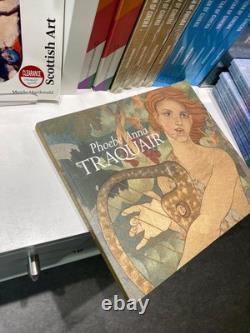


VERY RARE Arts & Crafts Masterpiece: Phoebe Anna Traquair's. The House of Life, 1904 limited edition (one of only 150 printed). REDUCED PRICE AND ADDITIONAL INFORMATION BELOW. Own a piece of Scottish art history with this exceptional edition of.
Sonnet sequence, illuminated by Irish-Scottish artist. This volume is a bridge between Victorian medievalist Romanticism and the modern craft revival. Pre-Raphaelite Roots : Directly inspired by the Pre-Raphaelite Movement and Dante Gabriel Rossetti, Traquair's work features the ethereal, elongated figures and deep emotional symbolism that defined the movement. Arts & Crafts Icon : A pioneer of the Scottish Arts & Crafts movement, Traquair rejected industrial art for the'spiritual depth of life'. Masterful Illumination : Drawing from medieval techniques and the.
Traquair's intricate manuscript work is considered the pinnacle of 19th-century book art. The House of Life: Sonnets and Songs.
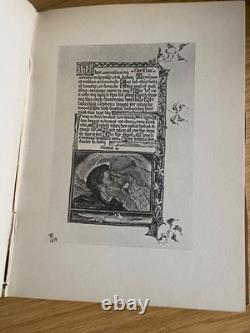
Author/Illustrator: Dante Gabriel Rossetti; Illustrated by Phoebe Anna Traquair. Extent: xiii, [68] leaves, printed on the recto only (one side of each leaf) on thick, card-like paper. Illustration Method: Black and white collotypes of the illuminated manuscript.Limitation: Limited edition of 150 copies. Binding and Paper : As was common with Hay's publications which included other Traquair works like. , different iterations often featured slight changes in the binding materials or paper quality to cater to different price points within the Arts and Crafts market.
Material: off-white vellum over boards. (edges of the cover overlap the paper block). Decoration: Gilt-stamped titles and Art Nouveau designs on the spine.
Note: Traquair published a previous edition in 1902, which she then expanded in 1904. 1904 edition was a second, expanded printing. That included additional photographic reproductions not found in the original 1902 release.
This second printing was an limited edition of only 150 copies, many of which are in museums such as the National Museum of Scotland and library special/rare books collections. Phoebe Anna Traquair was a leading figure in the Scottish late 19th- and early 20th-century arts and crafts Renaissance. Born in Dublin and later based in Edinburgh, she became the first woman to be elected an Honorary Academician of the Royal Scottish Academy in 1920, marking her status as one of the most versatile and accomplished artists of her generation.
A Multidisciplinary Visionary Traquair's work is defined by its extraordinary breadth, encompassing mural painting, jewel-like enamel work, intricate embroidery, and world-class manuscript illumination. Her style is a sophisticated synthesis of Pre-Raphaelite romanticism, Byzantine colour palettes, and the moral weight of the Arts and Crafts movement. She famously viewed art as a spiritual endeavour, seeking to bring "wholeness" to the domestic and public spheres through handcrafted beauty.The Master of Illumination While her large-scale murals-most notably those at the Mansfield Place Church (often called "Edinburgh's Sistine Chapel")-earned her public acclaim, her private manuscript work represents her most intimate and technically refined output. Drawing deep inspiration from medieval Irish manuscripts like the.
She revived the art of illumination for the modern age. Her work on Rossetti's. (produced between 1898 and 1904) is widely considered the zenith of this practice, showcasing her ability to translate complex poetic metaphors into vibrant, symbolic visual narratives. Traquair's legacy lies in her role as a bridge between the 19th-century ideals of. And the emerging modernism of the early 20th century.Her collaboration with the Edinburgh publisher. Was instrumental in democratising her work, using early photographic processes to share her unique visions with a discerning bibliophile audience. Identical copies of this book. From the same limited edition print run, are held in the permanent collections of the. National Museum of Scotland, National Library of Scotland.
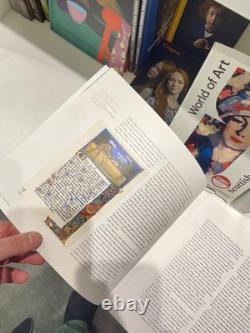
Victoria and Albert Museum , securing her place as a significant figure in British art history. Her work was exhibited in the major monographic exhibition at the National Portrait Gallery in Edinburgh in 1993 and in the National Museum of Scotland's 2015 exhibition'Celts: art and identity' (Traquair featured in the'Celtic revivalism' section of the show). As evidence of her importance, I include a couple of photos from one of the major art historical books about Traquair by art historian Elizabeth Cumming. Please note that this is for illustration purposes only and Cumming's book is not included in this sale.
The condition is commensurate with ithe age of the volume, which has been kept in a secure and environmentally stable enironment. The Spine: Showing some tanning. The Boards: light shelf-wear and minor scuffing to the edges. Gilt Work: Gilt titles remain bright and sharp. Yapp Edges: The overlapping edges are well-preserved.
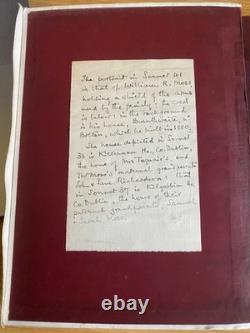
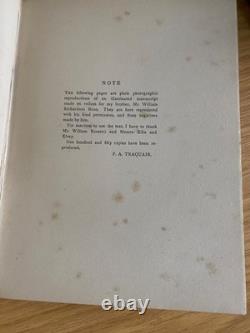
The Hinges: Front hinge is slightly tender but holding firm. The Pages: Shows light, age-appropriate foxing (spotting). The Plates: All monochrome collotype plates are present and in excellent condition. Discrete previous owner historic insert on front pastedown with handwritten (fountain pen) explanation of the significance of some of the buildings and individuals represented in the illustrations, author unknown, but appears to be highly familiar with the Traquair family (see photo). Good+ - A copy with appropriate signs of age and normal structural weakness.
More images available on request.